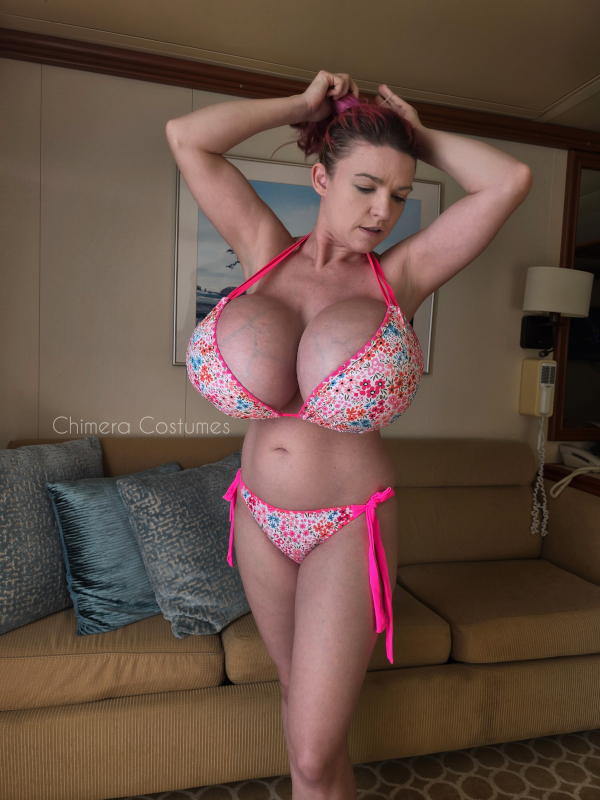

Breast ptosis — natural breast hang — is one of the most misrepresented aspects of large natural breasts in media. Real big natural boobs hang. They droop. They're affected by gravity. That is not a defect. That is what natural breast tissue actually does.
What Causes Breast Ptosis
Breast position on the chest is maintained by Cooper's ligaments — fibrous connective tissue that runs through the breast and attaches it to the overlying skin and chest wall. Over time, and particularly under the weight of large breast tissue, these ligaments stretch. Once stretched, they don't spring back. The result is that the breast tissue descends below its original position — the nipple-areola complex moves downward, the upper pole loses fullness, and the breast hangs lower.
The main factors that accelerate ptosis are breast size (more weight = more stress on ligaments), age, pregnancy and breastfeeding (which cause repeated volume changes), significant weight loss or gain, and genetics (some women have naturally more lax skin and ligament tissue than others). Wearing a bra may slow the progression of ptosis slightly by reducing ligament stress, but the evidence is not conclusive either way.
Grades of Ptosis
Grade 1 (Mild): The nipple is at the level of the inframammary fold (the crease under the breast). The breast has some visible hang but the nipple has not descended below the fold. Common in large natural breasts even in younger women.
Grade 2 (Moderate): The nipple has descended below the inframammary fold but is still above the lowest point of the breast. The breast droops visibly and hangs with significant weight. Extremely common in women with large natural breasts.
Grade 3 (Severe): The nipple points downward and is at the lowest point of the breast. The breast hangs significantly. This degree of ptosis is entirely normal in women with large natural breasts, particularly post-pregnancy or later in life. It is not a medical problem.
Pseudoptosis: The nipple is above the fold but the lower breast pole hangs below it. The breast appears to sag but technically doesn't meet the criteria for true ptosis by nipple position.
How Ptosis Looks in Photography
Natural breast hang is the most reliable visual indicator of real breast tissue in photography. If your boobs hang naturally, that’s the thing implants can’t replicate. Implants maintain a round, high, forward-projecting shape regardless of body position. Natural breasts with any meaningful ptosis will hang, spread, and change shape with body position. Lying down, large natural breasts with ptosis spread laterally across the chest. Standing, they hang with weight visible in the lower breast pole. Leaning forward, they hang away from the chest.
This positional variation is what many photographers try to minimize in commercial work — using pushup bras, specific angles, or editing to make natural large breasts look more like the round, high, implanted aesthetic. Educational photography of large natural breasts shows all positions honestly, including the positions that make ptosis obvious.
Gravity is not the enemy of big natural boobs. It is the proof of them.
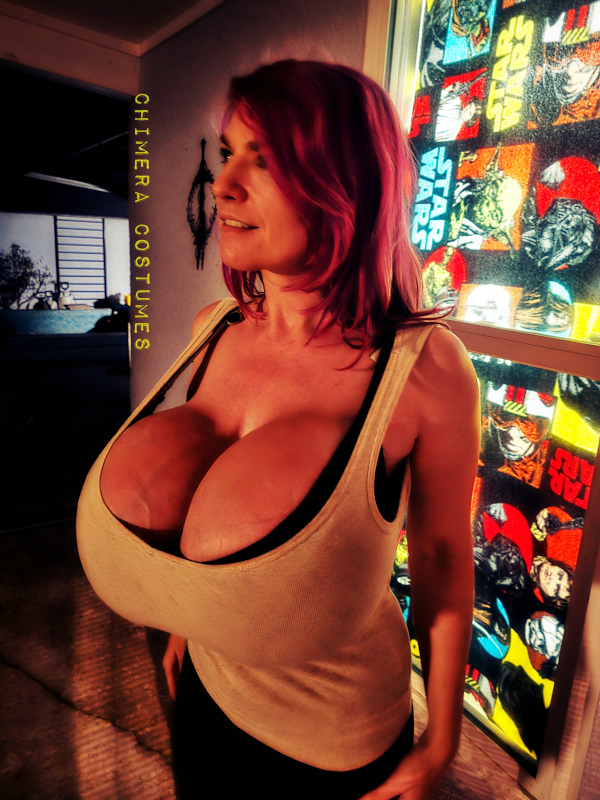
Ptosis vs Implants — The Visual Difference
The absence of ptosis is one of the clearest visual indicators of breast augmentation. Large implants maintain their round, high shape in every position because the implant shell holds its form regardless of gravity. Natural breasts of the same volume will hang lower, spread more when lying down, and show more movement when upright. This positional behavior difference is the most reliable way to distinguish natural large breasts from augmented ones in photography — more reliable than shape, roundness, or upper-pole fullness alone.

Frequently Asked Questions
What is breast ptosis?
Breast ptosis is the medical term for breast sagging — when the breast tissue and nipple descend below the inframammary fold (the crease under the breast) due to gravity, skin laxity, and the weight of breast tissue. It is completely normal in large breasts and increases with age, after pregnancy, and after significant weight loss.
Is breast ptosis the same as having saggy breasts?
Yes — ptosis is the clinical term for what is colloquially called sagging. It is graded from Grade 1 (mild, nipple at fold level) through Grade 3 (severe, nipple pointing downward significantly below the fold). Grade 3 ptosis in large natural breasts is entirely normal and not a sign of any medical problem.
Does breast size affect ptosis?
Yes significantly. Larger breasts carry more weight, which puts more stress on Cooper's ligaments (the connective tissue that supports breast position on the chest wall). Large natural breasts typically show more ptosis earlier than smaller breasts because of this increased weight.
Can breast ptosis be corrected without surgery?
No surgical correction exists non-surgically. Bras can mechanically support the breast and create better positioning, but they don't prevent or reverse ligament stretch. A mastopexy (breast lift) surgically repositions the nipple-areola complex and removes excess skin — it is the only correction for significant ptosis.
Do breast implants sag over time?
Implants themselves maintain their shape, but the overlying skin and tissue can stretch over time, particularly in women who had significant natural breast tissue before augmentation. This is called 'bottoming out' when the implant descends below the fold. It may require revision surgery to correct.
Subscribe for More
Premium photo sets, videos, behind-the-scenes content, and direct access. New content added multiple times weekly.
breast ptosis guide · natural breast hang · breast sagging education · big natural boobs hang · Cooper's ligaments · ptosis grades · natural breast droop · large natural breast hang · natural vs implants ptosis · breast hang photography · natural breast movement